
Training datasets, captured to order
We plan and run multi-view captures of people doing real tasks and having real conversations, on location or in our studio.
Each dataset is scoped to the model it will train, with synchronized outputs that can include 4D reconstructions, video, depth, motion capture, force, audio, and transcripts. The six examples below show the range of rigs, sensors, and outputs we work with.
Box Handling
One task, many bodies. Different people lift a box, carry it, and set it down on a plinth, each with their own height, reach, grip, and pace. A model trained on this sees the natural variation it will meet on a warehouse floor instead of one idealized motion, with every take reconstructed in 4D alongside its multi-view source video.
- Many performers, one task
- Lift, carry, turn, and place
- In-studio capture
- Every take reconstructed in 4D
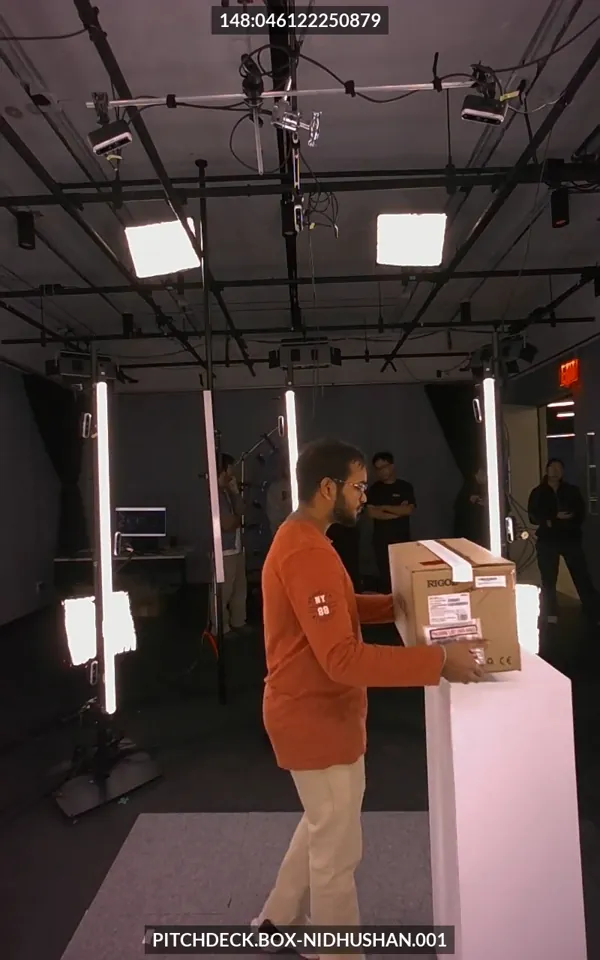
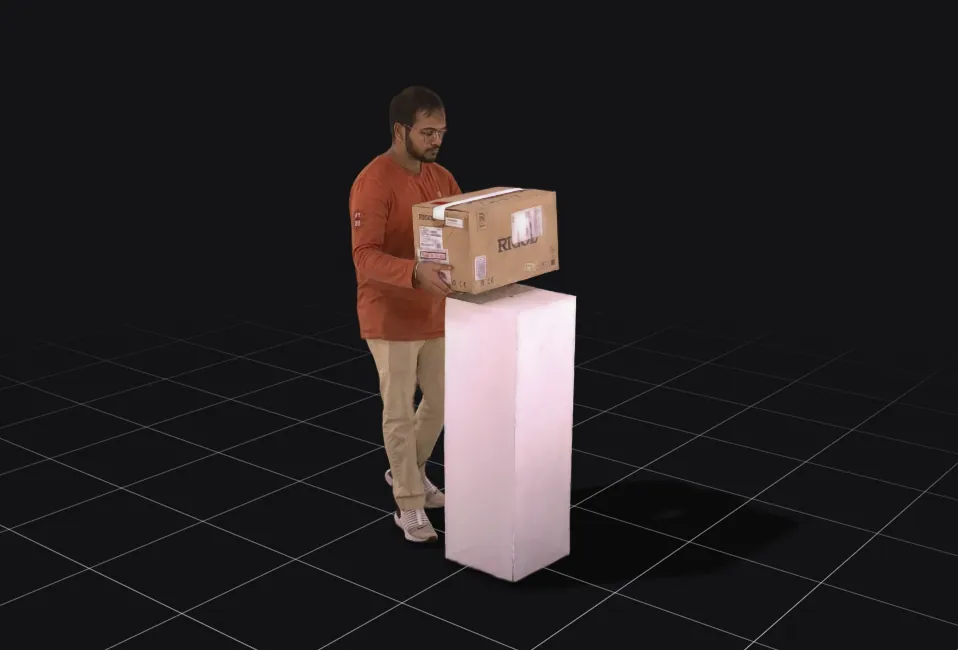
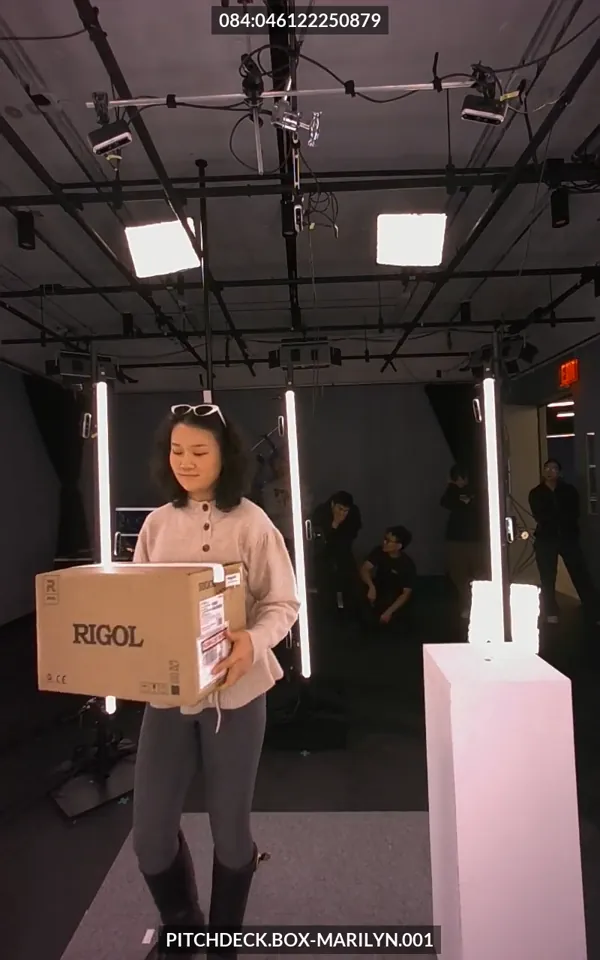
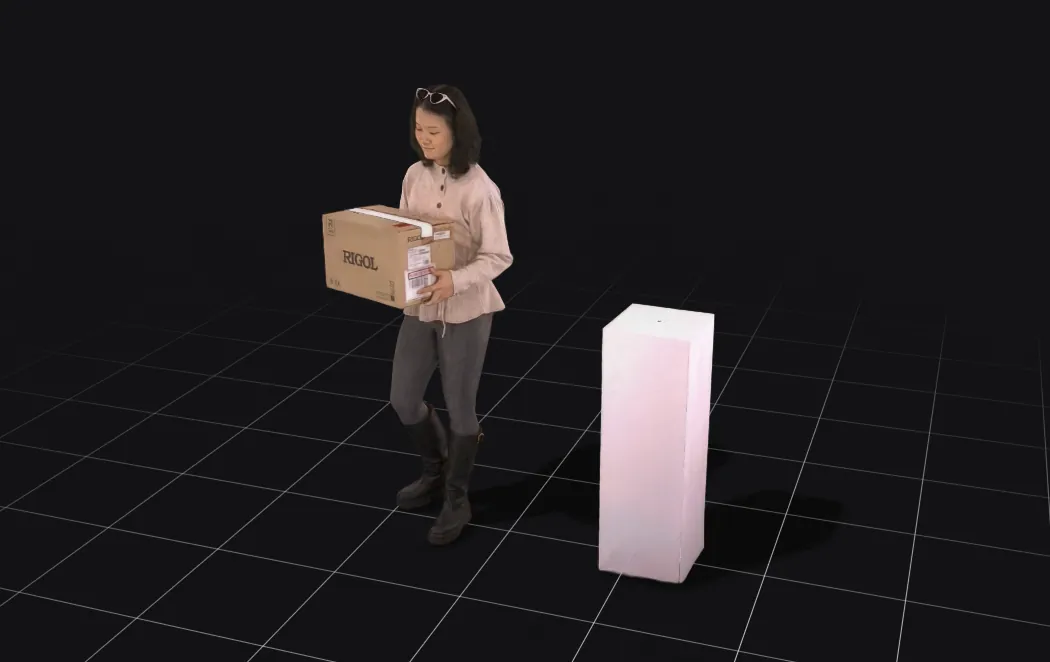
- 4D Gaussian splats
- 4D mesh sequences
- 2D frames
Grasp & Place
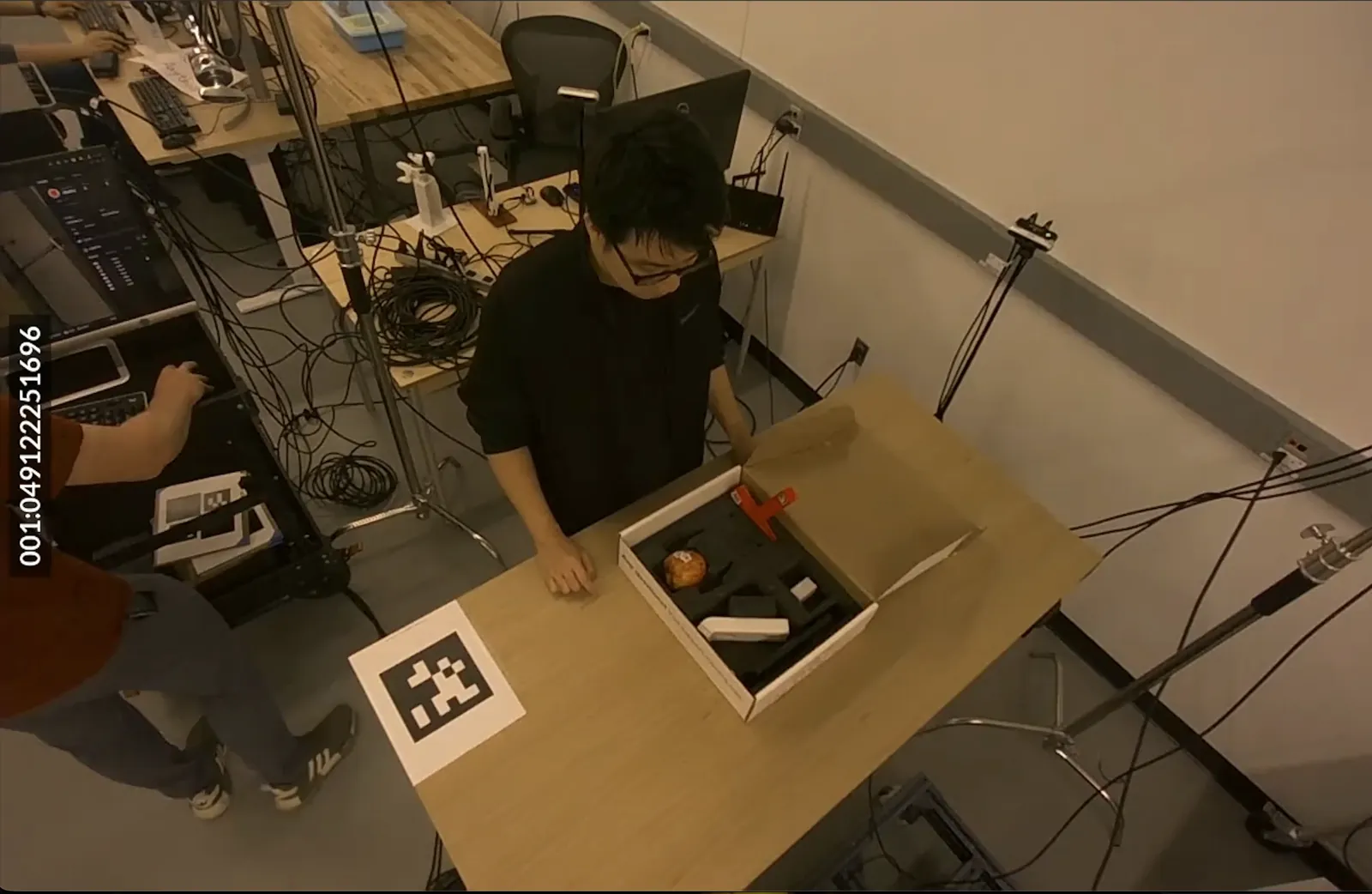
Objects picked from a tabletop and placed into and out of a partitioned box, captured in situ with a portable six-sensor RGBD rig. The same rig records people demonstrating the task and a robot arm performing it, giving both halves of a robot-learning loop a shared view of the scene.
- 6 RGBD depth sensors
- In situ, on-location capture
- Items into and out of a box
- Human demos and robot rollouts
Human demonstrations
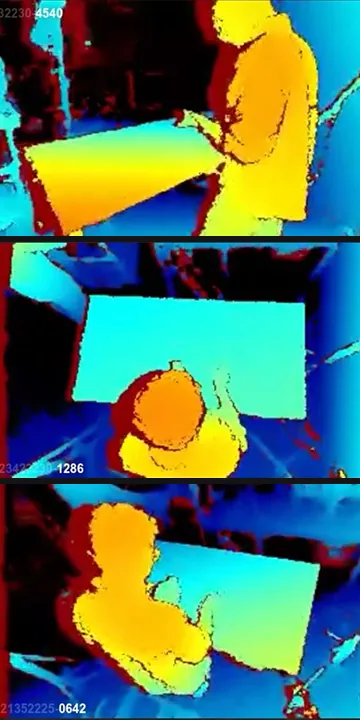
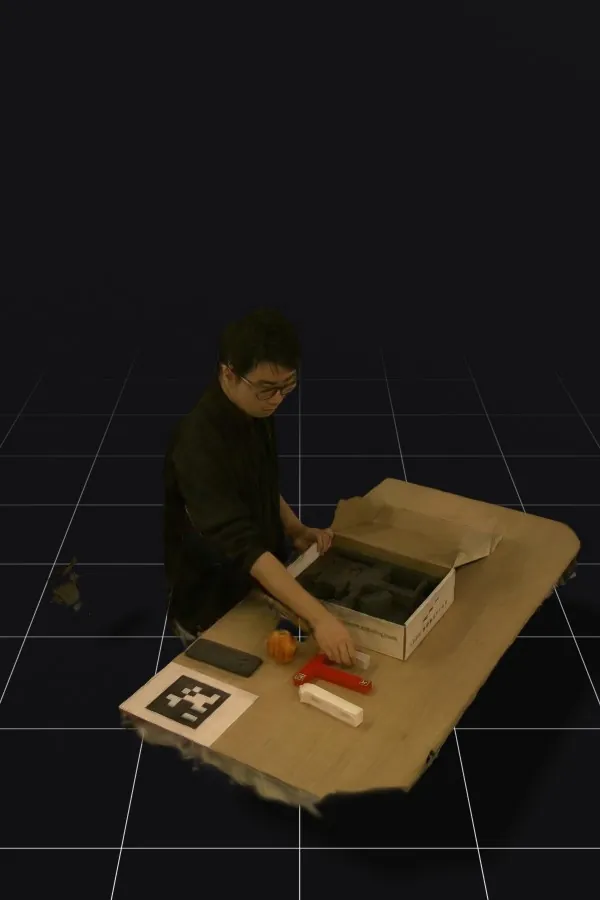
People perform the task naturally while six RGBD sensors record color and depth from around the table. Reconstructed in 4D, each demonstration becomes a clean trajectory of hands and objects for a policy to learn from and imitate.
Robot rollouts
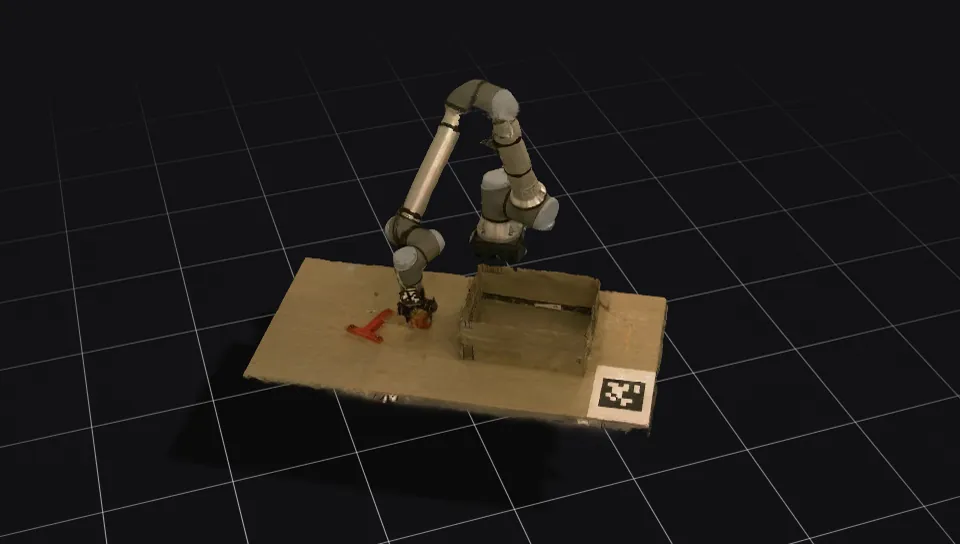
The robot then attempts the same task under the same sensors. Each rollout is reconstructed the same way as the human reference, so success, failure, and near-misses can be measured against it and fed back as reward.
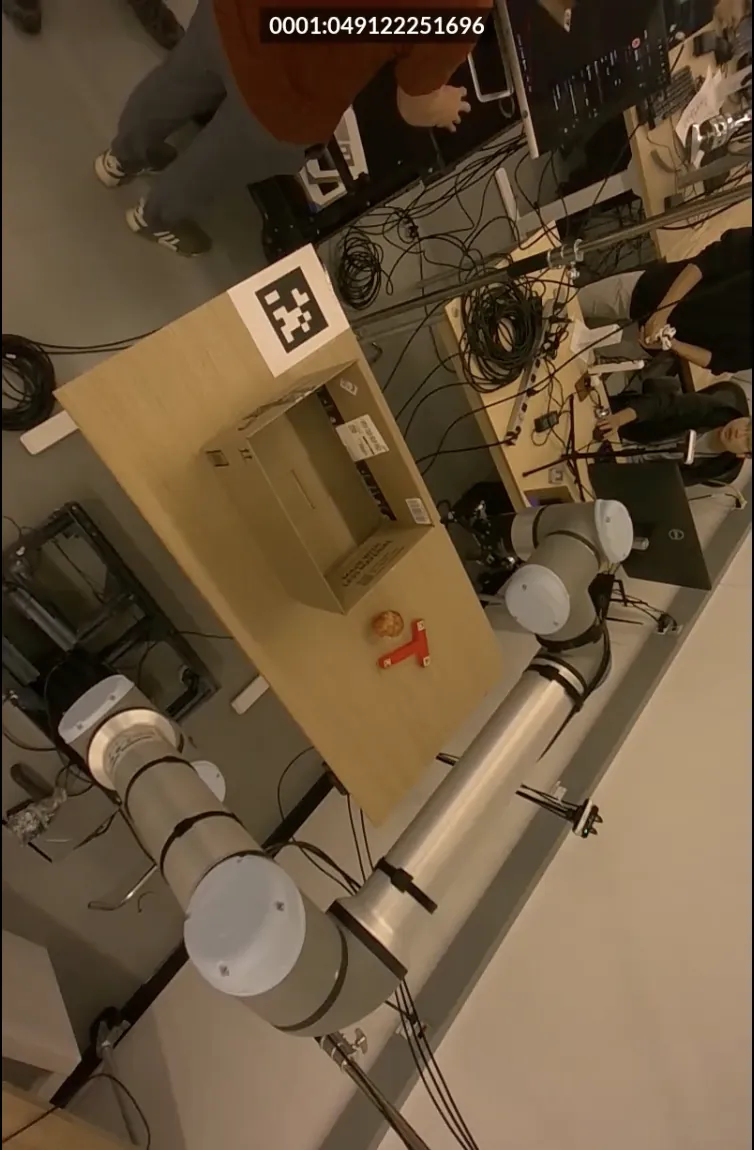
- 4D Gaussian splats
- 4D mesh sequences
- 2D frames
- Depth maps
Household Tasks
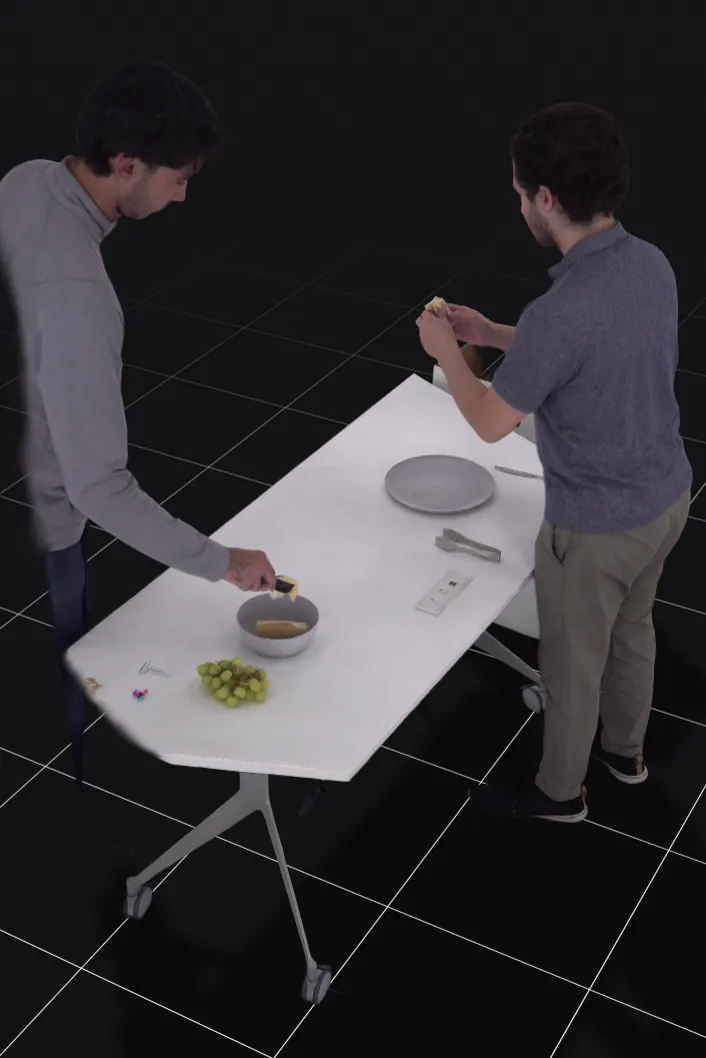
Everyday kitchen tasks, like pouring liquids between cups and cutting bread, captured in our studio by a 74-camera RGB array. Scenes include hand-object contact and multiple people working at the same table.
- 74 RGB cameras
- In-studio capture
- Pouring, cutting, multi-person
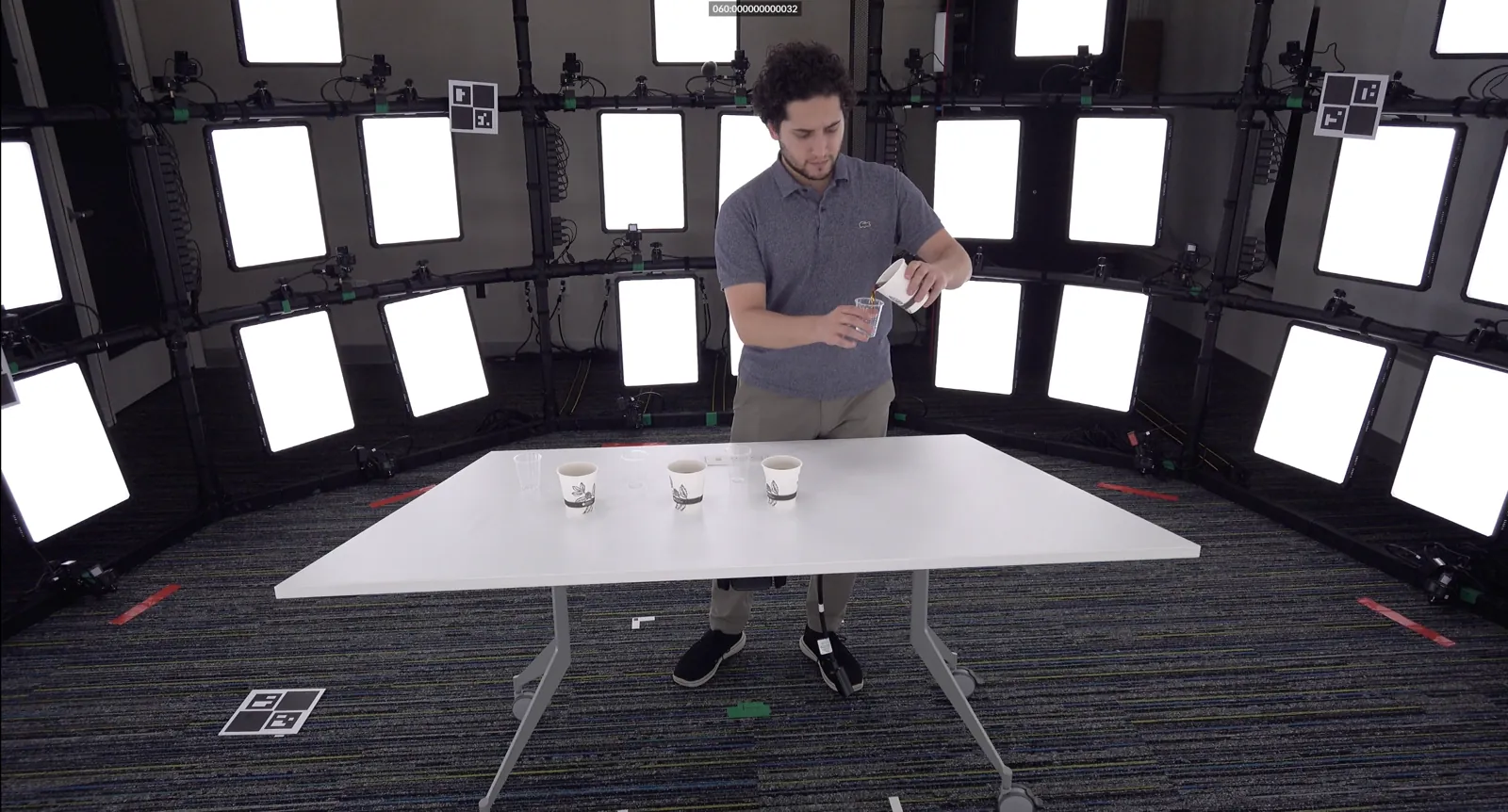
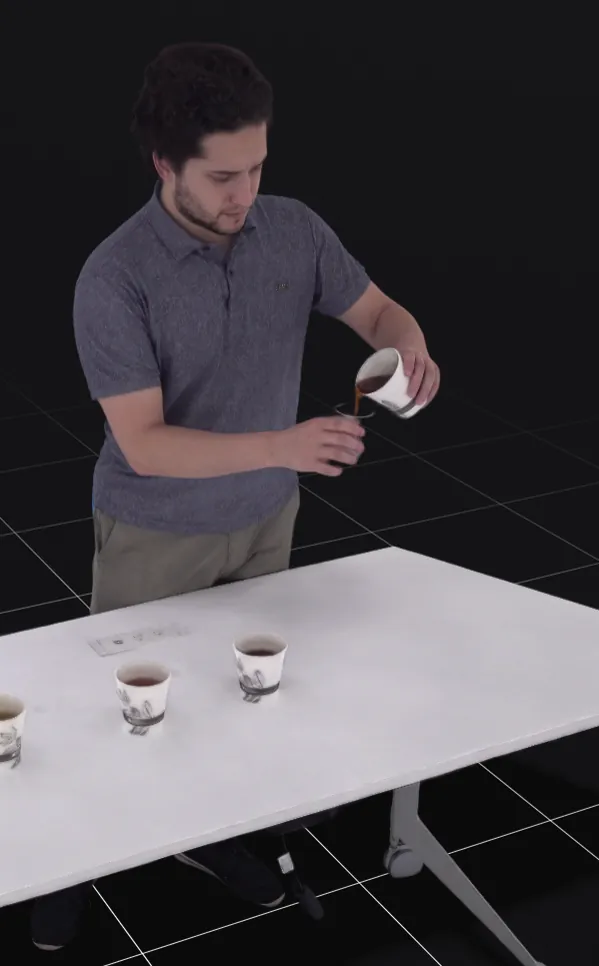
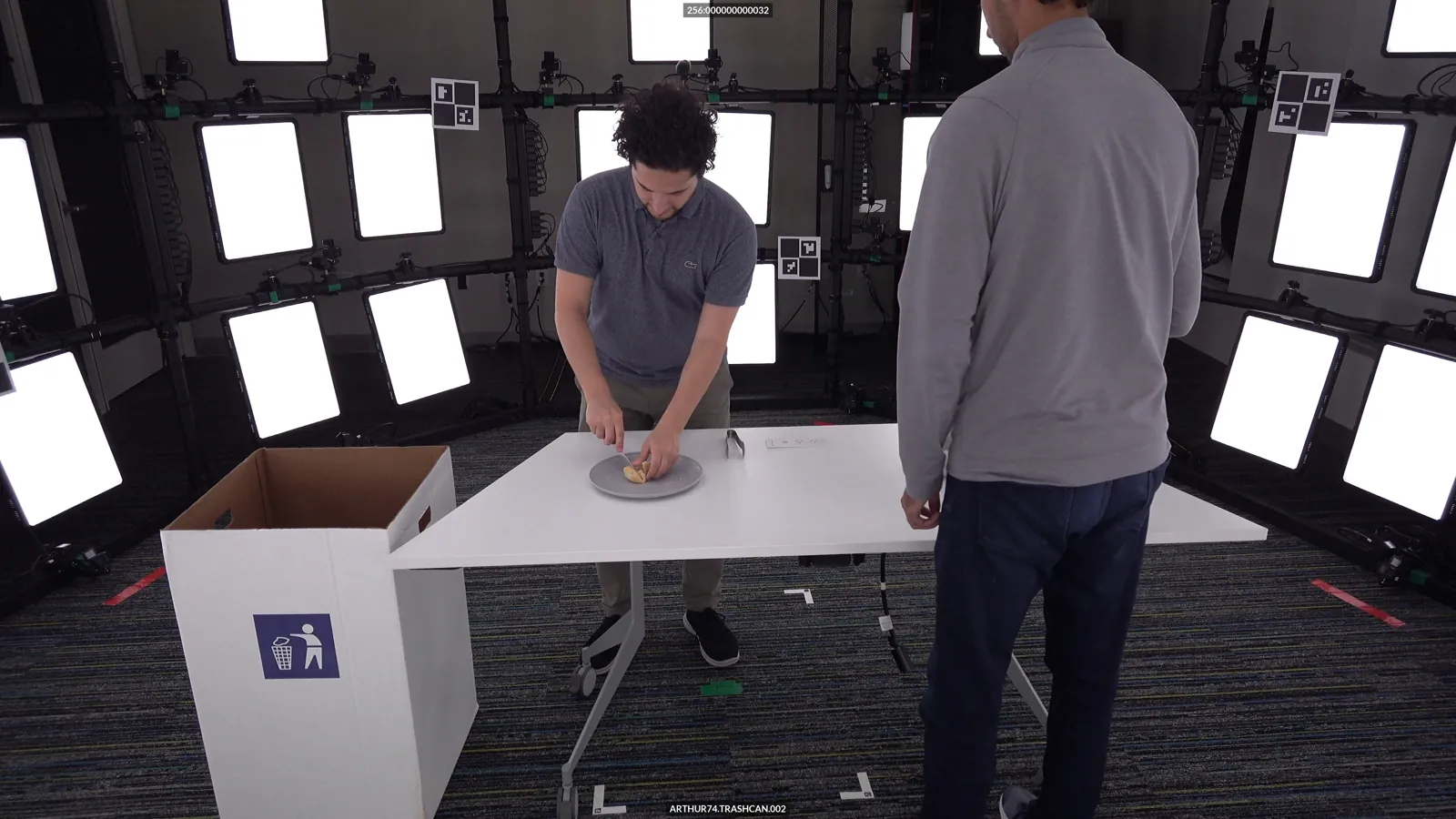
- 4D Gaussian splats
- 4D mesh sequences
- 2D frames
Stick Scraping
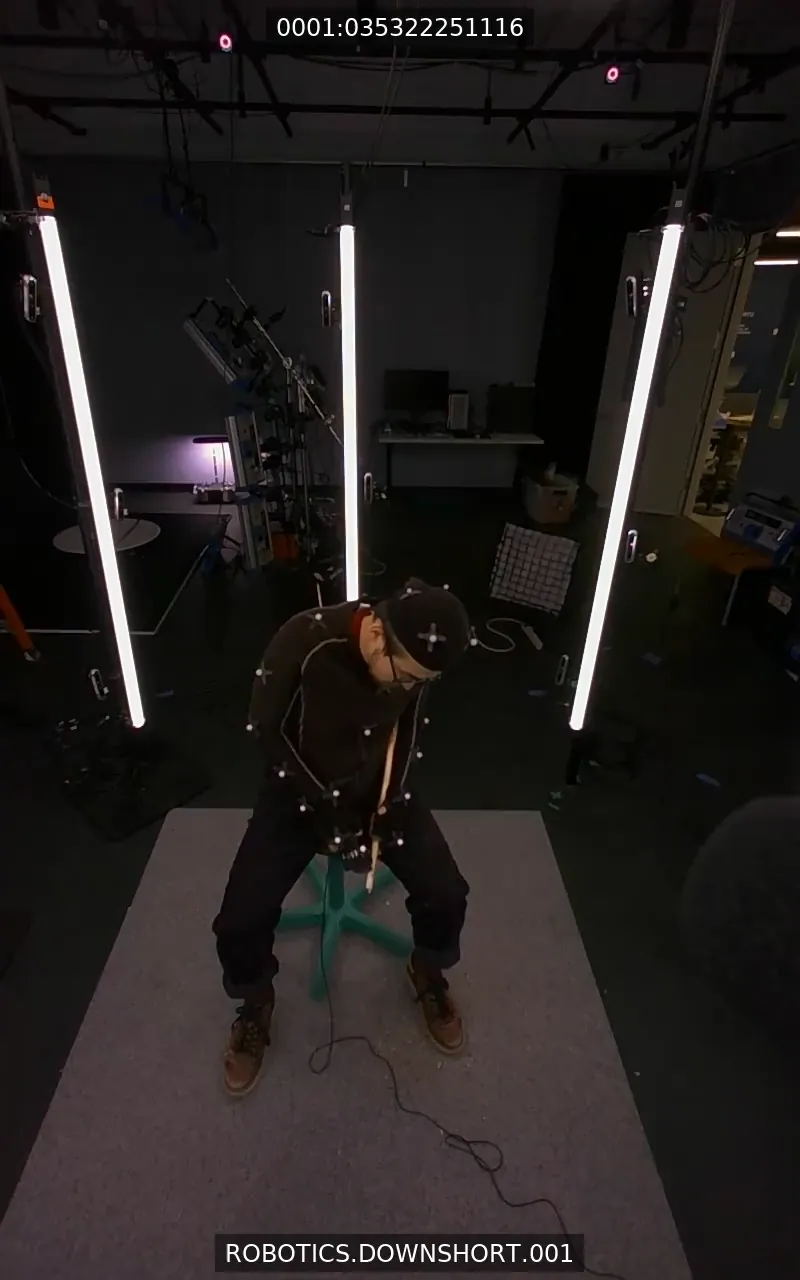
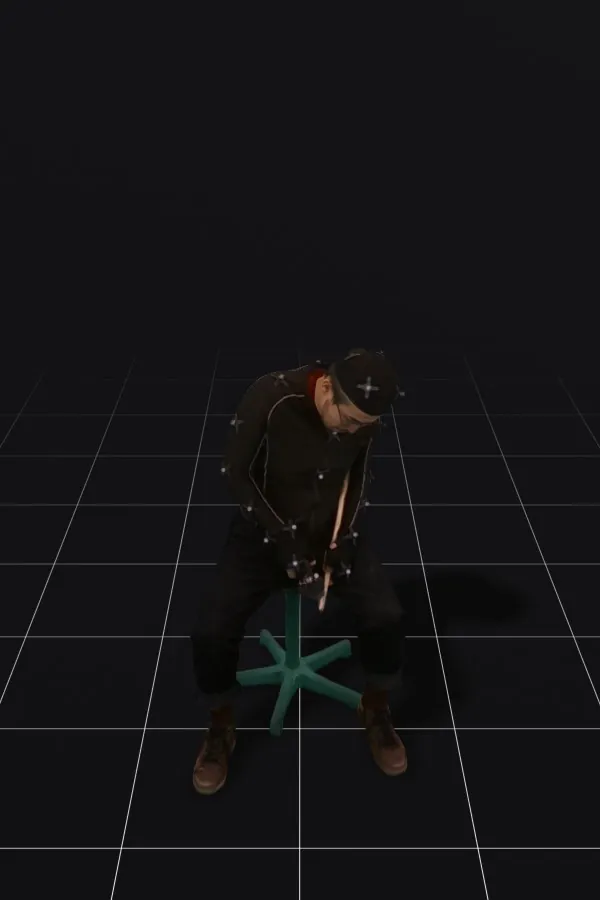
A seated performer works a handheld stick while RGBD cameras, an OptiTrack motion-capture system, and force sensors record the same take. Volumetric reconstruction, body motion, and contact force arrive as one dataset.
- RGBD cameras
- OptiTrack motion capture
- Force sensors
- Motion capture data
- Force data
- RGBD frames
- 4D Gaussian splats
- 4D mesh sequences
Physical Therapy
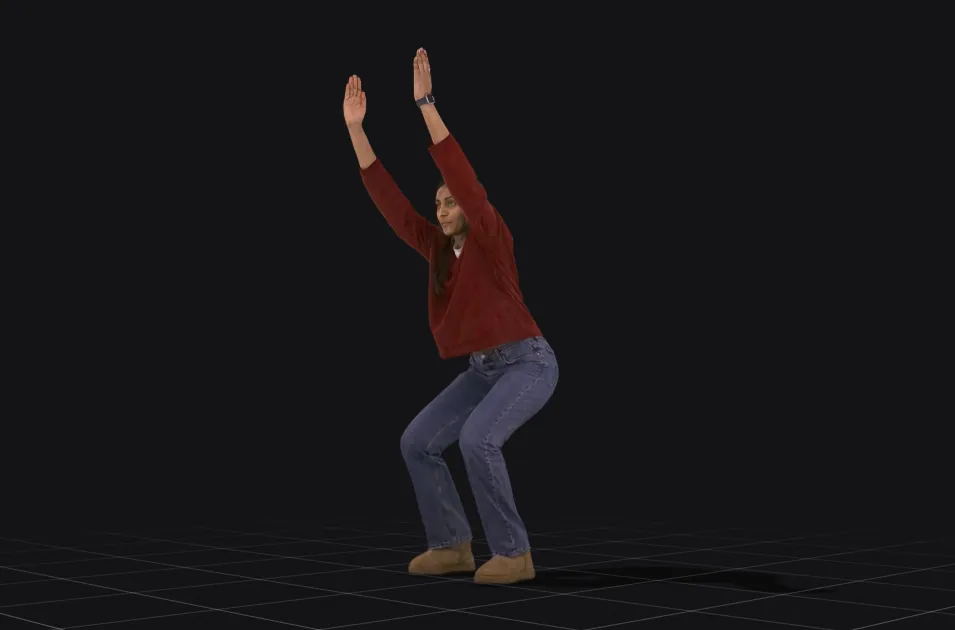
People performing therapeutic exercises, captured in 4D so vision models can learn how a movement is performed, not just whether it happened. Every repetition can be viewed from any angle, which makes form, range of motion, and balance measurable across different bodies.
- Guided therapeutic exercises
- Full-body 4D capture
- In-studio capture
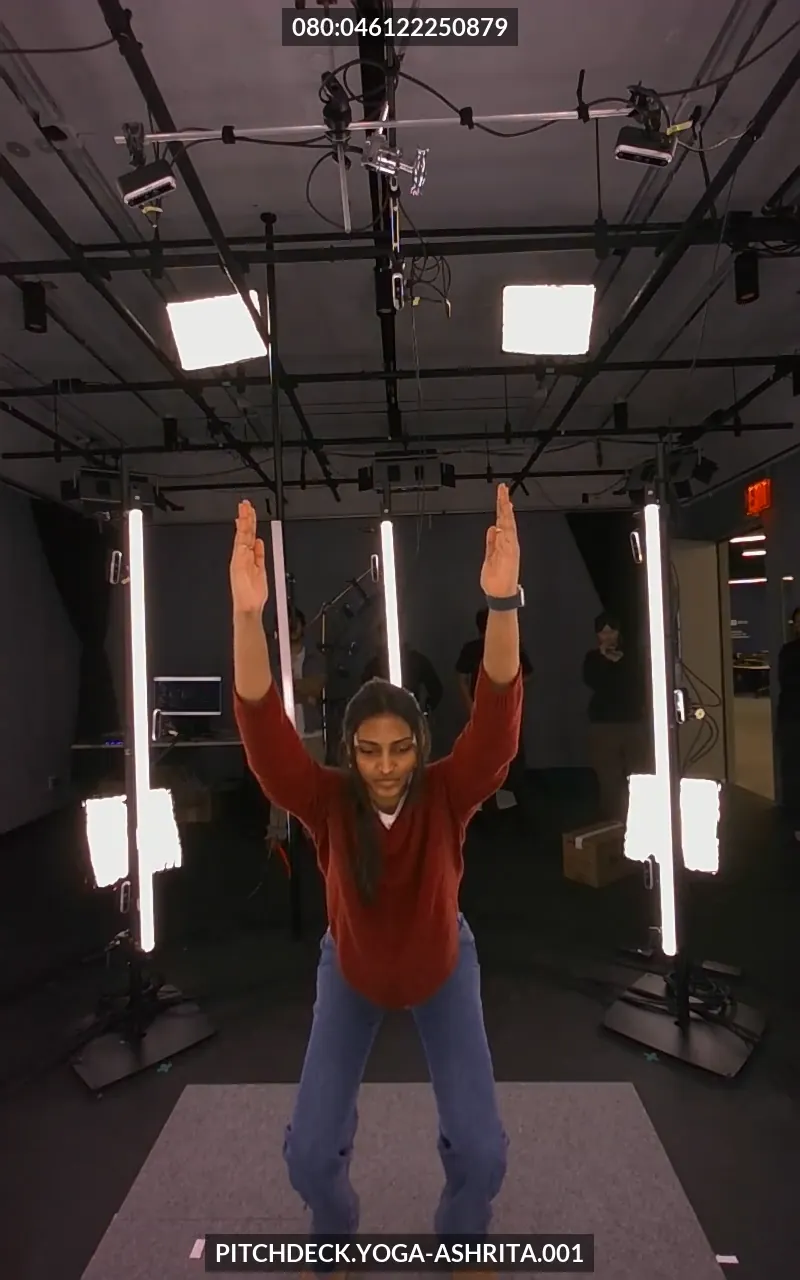
- 4D Gaussian splats
- 4D mesh sequences
- 2D frames
Paired Conversations
Two people in conversation, with both faces on camera for the full session. Video and audio are tightly synchronized and delivered with transcripts. We recruit and consent every participant, and stage each session in studio or in a situational scene with lighting to match.
- 2 participants, both faces captured
- Tightly synced video and audio
- Participants recruited and consented by us
- Studio or situational lighting and scenes
Two-camera studio session
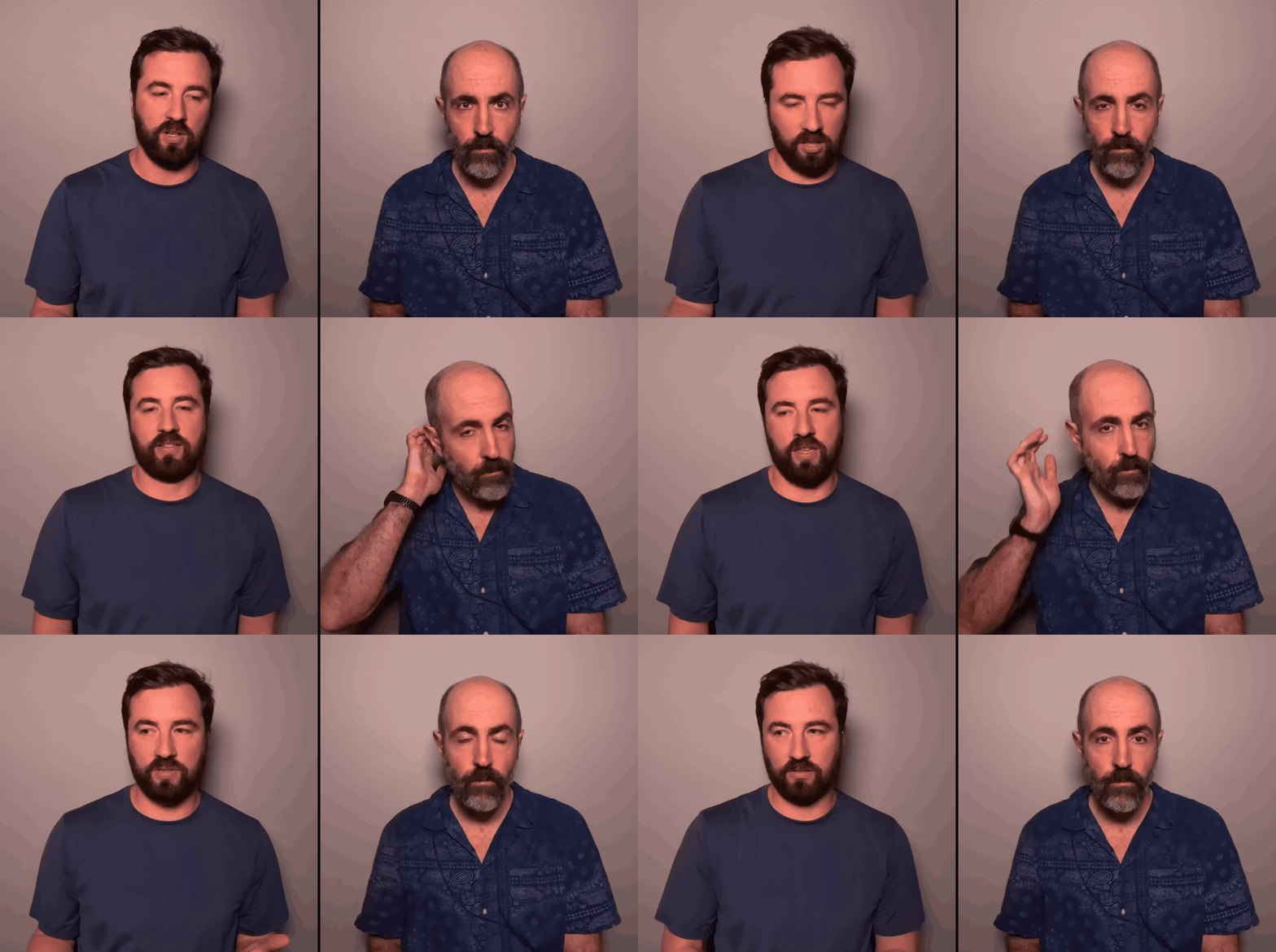 Participant A
Participant B
Semi-scripted advice conversation
Two partners talk through a surprise party that Speaker A never saw coming, with A seeking advice and B giving it. Each speaker has their own 1080p, 60 fps camera and audio track for about a minute of conversation, delivered with timestamped transcripts and scene metadata that labels the topic, roles, and target emotions.
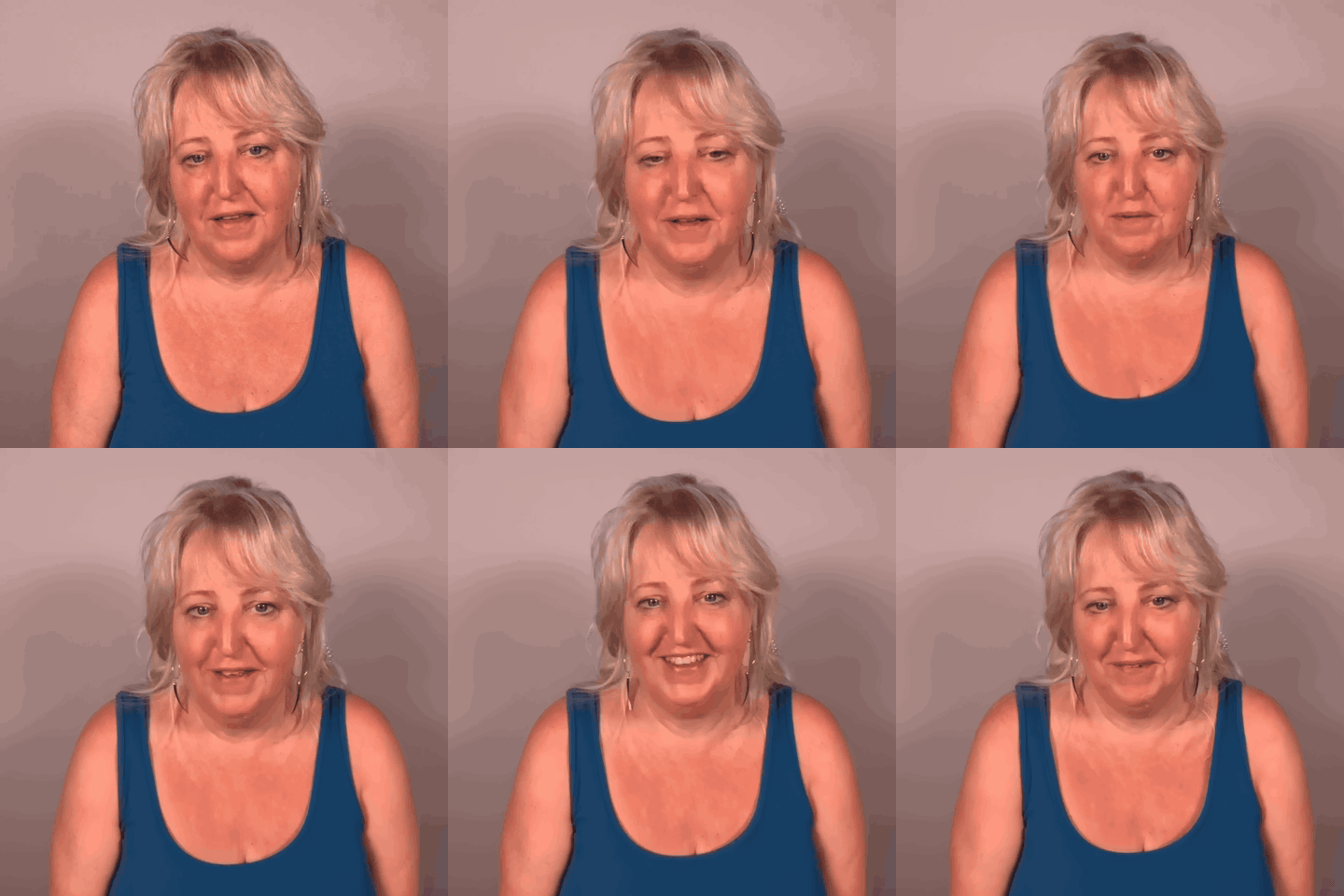
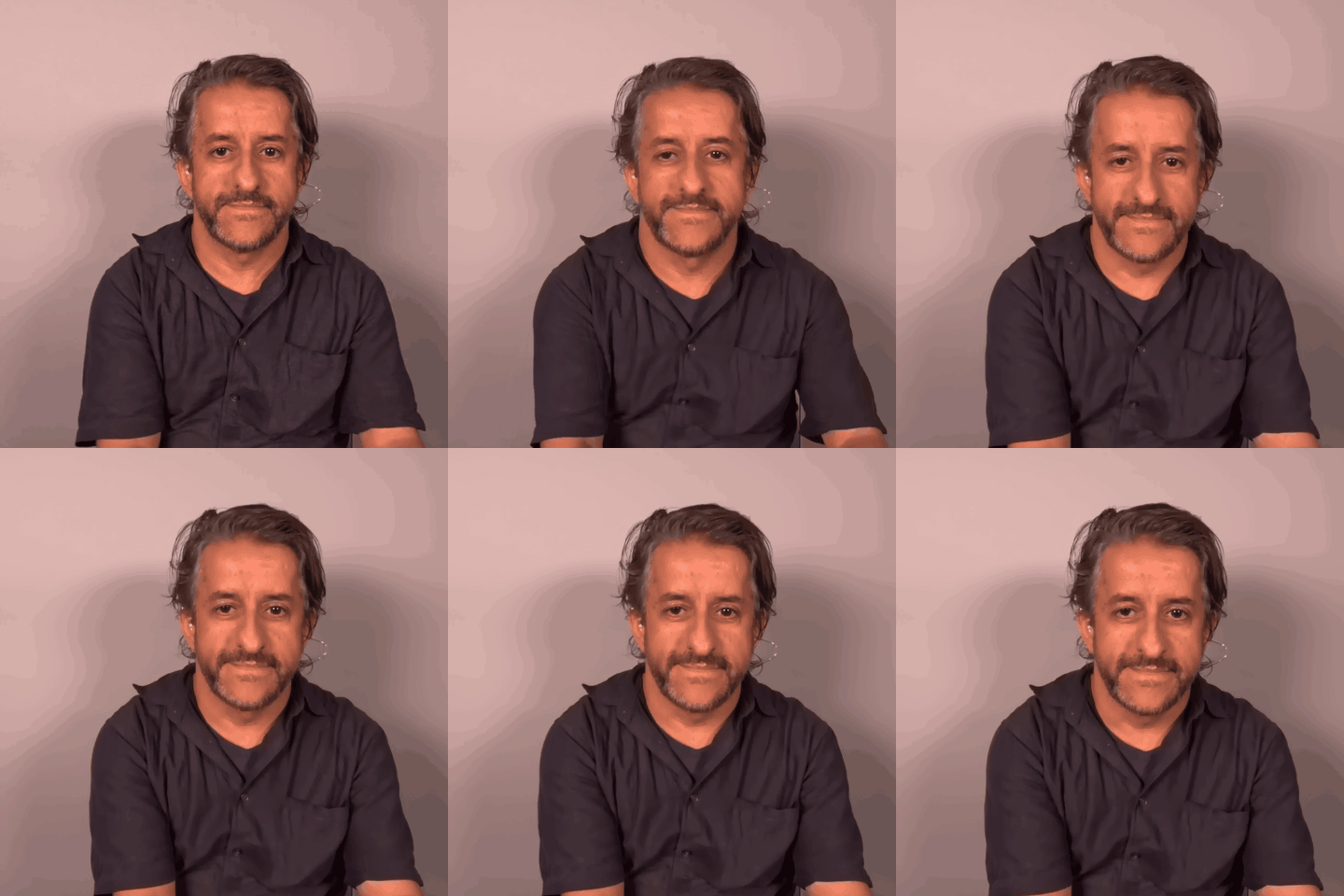
What's in the download (86 MB)
- speakerA.mp4, speakerB.mp4: one 1080p, 60 fps camera per speaker, with audio.
- speakerA.wav, speakerB.wav: each speaker's own audio track at 32 kHz.
- combined.mp4: both cameras side by side in one synchronized video.
- transcript.json: the full conversation as timestamped, speaker-labeled segments, plus a transcript file per speaker.
- metadata.json: scene topic, conversation type, speaker roles, target emotions, and demographic fields.
- Synchronized video
- Audio
- Transcripts
- Scene & speaker metadata
Have a dataset in mind?
Tell us what your model needs to learn, the setting, and any sensors you already run. We'll scope a capture around it.